
Category: Insights

  • Making the Right Call: Using Cost-Benefit Analysis for Software Selection

    Making the Right Call: Using Cost-Benefit Analysis for Software Selection

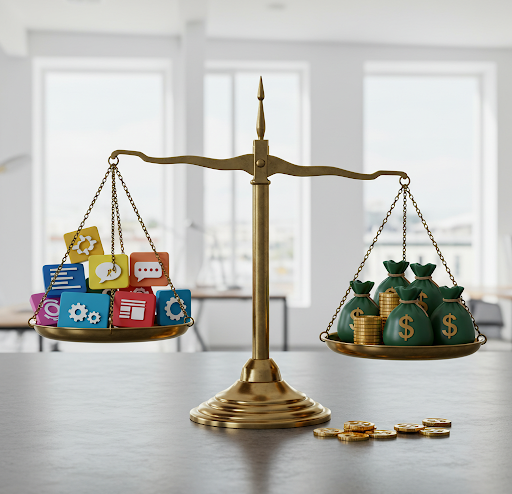
    Choosing new software for your business can feel like navigating a minefield. You’ve likely narrowed it down to promising options with compelling features and sleek interfaces. But how do you move beyond the demos and marketing jargon to make the right decision that benefits your bottom line and long-term goals? The answer lies in a powerful tool: cost-benefit analysis.

    Instead of relying on gut feeling or the flashiest presentation, a cost-benefit analysis provides a structured framework for evaluating your top software choices. It forces you to look beyond the surface and quantify each option’s potential gains and associated expenses. This systematic approach can illuminate each software’s value proposition and guide you towards the most strategic investment.

    How can you conduct this analysis? Let’s break it down:

    1. Identify and Categorize Costs: Start by listing all the potential costs associated with each software option. Be comprehensive and consider direct and indirect expenses.
      • Direct Costs: These are the obvious, upfront expenses such as the software license fees (per user, per month, or a one-time purchase), implementation costs (data migration, setup, initial training), and hardware upgrades that might be necessary to run the software effectively. Don’t forget to factor in ongoing subscription fees, maintenance costs, and potential additional modules or features costs.
      • Indirect Costs: These are less obvious but equally important. Consider the time your team will spend learning the new software, potential disruptions to workflow during implementation, and the IT resources required for ongoing support and maintenance.
    2. Identify and Quantify Benefits: This step is where you envision each software’s positive impact on your business. Think about how it can improve efficiency, boost productivity, reduce errors, enhance customer satisfaction, or even open new revenue streams.
      • Tangible Benefits: You can directly measure these in monetary terms. For example, will the software automate tasks and save your employees a certain number of weekly hours? Translate this time savings into potential salary cost reductions or the ability to allocate those hours to more revenue-generating activities. Will it reduce errors that currently cost your company money to fix? Quantify these savings. Will it lead to faster processing, allowing you to handle more customer orders? Estimate the potential increase in sales.
      • Intangible Benefits: These are still crucial but are more challenging to quantify in dollars. Consider improvements in employee morale due to a more user-friendly system, enhanced data accuracy leading to better decision-making, or improved customer communication leading to stronger loyalty. While you can’t put an exact dollar figure on these, acknowledge their value and try to assign a relative score or ranking to them across your software options.
    3. Assign Values and Calculate: Once you’ve identified the costs and benefits, the next step is to assign realistic monetary values to them whenever possible. You might research industry benchmarks, consult with your team, or make informed estimates. Create a scoring system (e.g., on a scale of 1 to 5) to compare the options for intangible benefits. Calculate the total estimated costs for each software option over a specific timeframe (e.g., one year, three years). Then, calculate the total estimated tangible benefits over the same period. Finally, subtract the total costs from the tangible benefits to determine each software’s net benefit figure.
    4. Compare and Analyze: Now you have a clearer picture of the potential financial impact of each software choice. Compare the net benefit figures. The software with the highest positive net benefit is generally the most financially advantageous. However, also consider the intangible benefits and your scoring for those. Software with slightly lower net tangible benefits but significantly higher intangible benefits might still be the better long-term strategic choice.

    Beyond the Numbers:

    While cost-benefit analysis provides a quantitative framework, remember that it’s not the only factor to consider. You should also consider the software’s ease of use, scalability, vendor reliability, customer support, and integration capabilities with your existing systems. Combining a thorough cost-benefit analysis with careful consideration of these qualitative factors allows you to move beyond the hype and make a well-informed decision that sets your business up for success. Choosing the right software is an investment; like any investment, it deserves careful evaluation.

  • Positioning and Branding: Keeping Your Promise in a Digital World

    Positioning and Branding: Keeping Your Promise in a Digital World

    Profiting from a customer-centric approach takes more than defining your brand; you must sustain it in every interaction. As a digital transformation consultant, I see many growing businesses with a clear vision, but their operations often fail to deliver it consistently.

    Let’s explore strategic positioning and how I can help you leverage technology so employees deliver on your brand promise.

    Strategic Positioning versus Brand Positioning

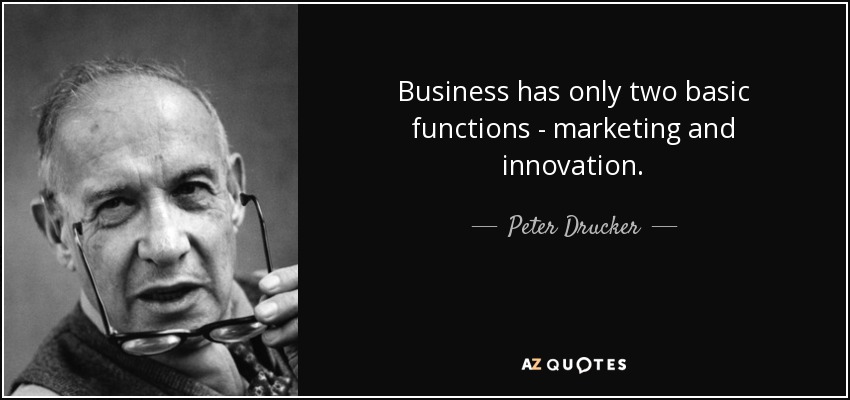
    Peter Drucker, the renowned management consultant, said a business has only two basic functions: marketing and innovation. Everything else is a cost. Strategic positioning guides these. It is the internal “North Star” behind every decision, from pricing to your software choices.

    While strategic positioning is internal, Brand Positioning is external. It is the specific action you take to plant your brand in your customer’s mind. It influences how they feel about you and, ideally, distinguishes you from your competitors.

    However, a brand is more than a logo or slogan; it’s a personality defined by behaviour. Your brand lives in the memories and experiences customers have with your team.

    The Danger of Growth: When Consistency Cracks

    When a company is small, the founder ensures brand personality in every sale. As you grow from 10 to 50 employees, keeping that personal touch is hard.

    Growth often dilutes value propositions. New employees join the team, and without the right tools, they may struggle to deliver the same level of service that built your reputation. If a customer receives excellent service from Sales but encounters frustration with Support because the systems don’t integrate, your brand positioning crumbles. Inconsistency leads to mixed signals, which erode trust.

    How Technology Protects Your Brand

    This is where my work as a digital transformation consultant connects with your branding strategy. I help you select and implement software that delivers a unified experience, ensuring your brand promise remains consistent regardless of who handles the account.

    1. Empowering Employees to Deliver Excellence: Your employees are your brand ambassadors. Outdated software or manual data entry distracts them from customers. I help automate tasks, so your team can focus on delivering empathy and critical thinking. With better technology, your team is happier and better represents your brand.
    2. Breaking Down Information Silos: Consistent brands need consistent data. If marketing promises a value proposition, sales and support must see that history. I connect your CRM, marketing, and support systems so every employee has a single customer view. This ensures that all client interactions align with your strategic positioning.
    3. Building Brand Equity: Using technology to operationalize your brand builds Brand Equity—the value of your name and reputation. This goodwill lets you command premium prices and protects against competitors. By mapping the customer journey and removing friction, I help turn your customers into loyal advocates.

    Practical Tool: The Positioning Platform

    To start, you need a clear message. I often recommend a simple “Positioning Platform” to guide your marketing and operations.

    1. FOR: (Insert target audience definition)
    2. BRAND: (Insert core benefit statement)
    3. BECAUSE: (Insert proof statement).

    My role is to help you prove the “BECAUSE” statement. If your proof is “Because we offer the fastest response times,” I will help implement communication tools and automation to ensure this is always true.

    The Bottom Line

    Without defined positioning, a company lacks focus. Without the right technology to execute it, credibility is lost. By combining strategic branding with digital transformation, I help simplify operations, making service and growth easier, and teams and customers happier.

  • Start with the Customer: Scaling the Personal Touch

    Start with the Customer: Scaling the Personal Touch

    When I was younger, I remember going with my dad to his tailor. The moment he walked into the store, the salespeople greeted him by name. They knew his shirt size, remembered his style, and made recommendations based on his wardrobe.

    That experience sets the benchmark for customer service. The central challenge for growing businesses is maintaining that personal connection as the company scales. How can you deliver the same warmth and familiarity—from websites to chatbots to different departments—as you move from 10 to 50 employees?

    Steve Jobs once said, “You’ve got to start with the customer experience and work backwards.” This captures the essence of customer-centricity, where every decision and strategy is rooted in delivering the best possible customer experience.

    Service with a Smile is No Longer Enough

    New customers are hard to find, and keeping them is essential for profitability. However, the bar for keeping them has never been higher.

    According to Salesforce Research, 73% of customers say that one extraordinary experience raises their expectations. They want seamless service, moving between your website, phone support, and physical location without having to repeat their story.

    If your systems don’t talk to each other, your customer feels ignored—like a transaction number rather than a person. In fact, 61% of customers say unmet expectations make them feel the company doesn’t care.

    The Data Disconnect

    While technology has made business faster, it has also made it more complex. You might have “Big Data,” but if that data is overwhelming your team, it isn’t helping your customer.

    Many businesses suffer from information silos. Your marketing team knows what the customer clicked on, your sales team knows what they bought, and your support team knows what they complained about, but none of these teams shares that view. This fragmentation forces your employees to operate with a “myopic” view of the customer experience, focusing only on their specific tasks rather than the relationship.

    How We Fix It: Empathy at Scale

    To win today, you must use technology to deliver empathy at scale. This means moving beyond simple transactions and building a “single view” of your customer.

    This is where my work as a digital transformation consultant comes in. I help you connect your internal systems (e.g., connecting your Customer Relationship Management software to your website and digital marketing campaigns) so data flows freely between departments. Whether you use Salesforce, HubSpot, or another platform, the goal is to ensure that the first person a customer speaks to can solve their problem by having access to the correct information.

    Building a Customer-Centric Culture

    Technology is the tool, but culture is the driver. For a customer-centric approach to work, your entire organization must adopt it.

    When we simplify your business with technology, we aren’t just automating tasks; we are freeing up your team to be human. We remove the frustration of manual data entry and file searching, so your employees can focus on listening to and responding to client needs.

    By putting the customer experience at the heart of every process, we reduce friction, build trust, and foster long-term loyalty. This approach drives sustainable growth—for both your business and your team.

  • Customer Journey Maps: Finding the Hidden Gaps in Your Business

    Customer Journey Maps: Finding the Hidden Gaps in Your Business

    Most businesses have gaps between their departments that frustrate their customers. My goal is to help you find these gaps, manage them, and better integrate your operations so your customers have a seamless experience.

    What is a Customer Journey Map?

    A customer touchpoint is any time a person interacts with your brand, whether they see an advertisement before they buy or receive an invoice months later. However, looking at these interactions one by one doesn’t tell the whole story.

    A Customer Journey Map is a visual representation of every experience your customers have with you, combined into a single perspective. Think of it as a story that reveals the underlying complexity of your business. It forces you to step back and examine how your customers perceive your organization over time, rather than focusing on individual transactions.

    Why You Need One

    Most business owners assume their processes are working well because individual departments are doing their jobs. However, customers judge your company based on their overall experience, not just on a single sale or support call.

    When customers move from your marketing channels to your sales team, or from sales to customer support, they often experience friction. This happens when systems don’t talk to each other, forcing customers to repeat information, or when service levels drop unexpectedly. These gaps become the seeds of bad experiences that damage your brand’s reputation.

    By mapping the journey, we can identify these pain points. We can spot where manual data entry is slowing down your team or where a lack of communication is confusing your client.

    How I Help You Build It

    I use the Research and Assess phase to build these maps with you. We don’t just guess; we use workshops to get the truth from your teams.

    1. The Workshop: One of the most effective ways to build a map is to bring your team together. I facilitate workshops that include frontline workers—those who speak to customers every day—and senior decision-makers. This mix is crucial because it educates leadership on the reality of user experience while giving staff a voice.
    2. Identifying Touchpoints: Together, we list every touchpoint your customer encounters. We look at the “principal stages” a customer passes through: Discovery, Research, Purchase, Delivery, and After-sales. We ask difficult questions, such as:
      • What is the user trying to achieve at this stage?
      • How does the organization let the user down here?
      • What emotions is the user feeling?
    3. Visualizing the Friction: Once we have the data, we create a visual map. This isn’t just a poster for the office wall; it is a diagnostic tool. It highlights the friction—the hidden costs and wasted labour in your current processes.

    Turning Insights into Action

    The actual value of a Customer Journey Map lies not in the diagram itself, but in the actions it inspires. Once we see the gaps, we can fix them.

    This is where my role as a digital transformation consultant becomes vital. I use the map to assess your technology stack. Often, the “gaps” on the map are actually technology problems, such as underutilized software, poor data integration (for example, between your CRM and your email marketing), or manual tasks that should be automated.

    I help you prioritize these fixes using the RICE technique (Reach, Impact, Confidence, Effort). We focus on the changes that will have the most significant impact on your customers’ happiness and your bottom line.

    The Bottom Line

    Deep, long-lasting customer relationships don’t just happen; they result from well-planned end-to-end experiences. Companies that perform best on these journeys have a distinct competitive advantage over those that only focus on individual sales.

    By mapping your customer journey, I help you weed out unintended negative perceptions and replace them with a consistent, high-quality service that builds trust. When you fix the journey, you simplify your business, making growth easier for you and satisfaction higher for your teams and customers.