Category: Insights

  • The Christmas Tree Effect: Why Your Software Requirements List is Killing Your Growth

    The Christmas Tree Effect: Why Your Software Requirements List is Killing Your Growth

    We are hardwired to believe that more is the solution. When a process breaks, we add a step. When a team struggles, we add a tool.

    In his book Inside the Box, David Epstein discusses the “Christmas Tree Effect” (or “featuritis”)—the human tendency to keep hanging ornaments on a project until the original structure is buried under unnecessary complexity. We humans, have a natural additive bias, and we consistently overlook solutions that involve taking things away.

    I saw this play out with a nonprofit client previously. As a smaller organization, their leadership encouraged a tech-first mindset. But as the team grew, the volume of software became a Christmas Tree. New staff were overwhelmed, unsure which tool solved which problem. Instead of empowering the team, the complex infrastructure held them back.

    Ultimately, we stepped back and conducted a simple audit of software tools, identifying which platforms were truly essential to the team’s daily work. Together, we eliminated redundant systems and streamlined workflows around the tools that actually solved real problems. As a result, onboarding for new staff became more straightforward, and the team reported being able to focus more time on mission-critical work rather than troubleshooting technology.

    The Procurement Trap: Forecasting the Maybe

    The Christmas Tree Effect is most dangerous during software procurement. Leaders often build requirements lists based on 5- or 10-year forecasts. They add nice-to-haves for a future that hasn’t arrived yet.

    When you look too far ahead, you fall into the trap of Feature Bloat. You buy a Ferrari to drive to the grocery store because you might enter a race in 2029. This approach doesn’t just waste money; it creates a steep learning curve that kills staff adoption today.

    Learning from the Innovator’s Dilemma

    Clayton Christensen famously noted in The Innovator’s Dilemma that industry leaders often fail because they focus on adding high-end features that their average customers don’t actually need. This focus creates a vacuum for newcomers to disrupt the market with lower-cost, lower-quality tools that actually address immediate needs more effectively.

    In your business, the disruptor should be you. Instead of chasing the most complex, feature-rich platform, consider the tool that will solve your challenges over the next 6 to 18 months.

    How to Build a Lean Requirements List

    To avoid the Christmas Tree Effect in your next digital transformation project, use these three filters:

    1. The 18-Month Rule: If a feature isn’t critical to your operations within the next year and a half, it’s an ornament. Strip it off. Focus on immediate “moments of truth” for your customers.
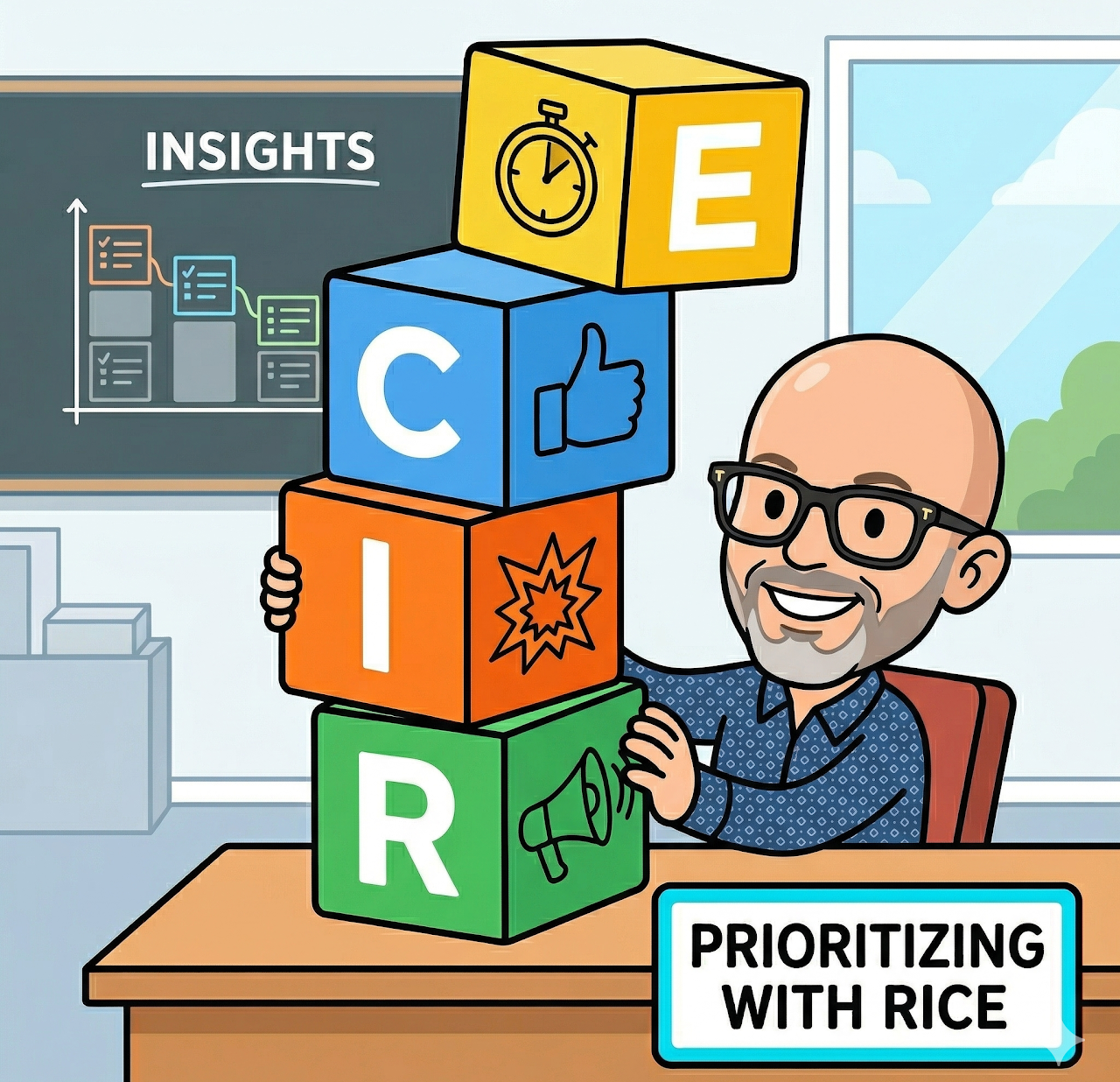
    2. The RICE Filter: Score your needs by Reach, Impact, Confidence, and Effort. High-impact, low-effort tools that benefit the most customers should always come first.
    3. The Sarah Test: Picture an employee like Sarah in your office. Will this new feature actually remove her manual copy-paste drudgery, or is it just another dashboard she has to learn to navigate?

    When you are in a procurement meeting, start by sharing these filters with your team and applying them directly as you review your requirements list. Ask everyone to apply the filters to each feature or tool before adding it to your must-have list. This opens up constructive debate and helps focus the discussion on what matters right now, not just hypothetical future needs.

    The Bottom Line

    Digital Maturity isn’t about owning the most tools; it’s about having the right tools for your current stage of growth. Don’t let the ghost of a future need ruin your current productivity. To ensure your requirements list truly supports your team, track simple metrics such as user adoption rates, time to onboard new staff, and reductions in manual work. Regularly checking these indicators can help leaders see real progress and adjust when needed.

    Before you buy your next piece of software, ask: Are we solving a problem, or are we just decorating a tree?

  • Maximize Your Marketing Impact: A Practical Guide to Building Growth with the PESO Framework

    Maximize Your Marketing Impact: A Practical Guide to Building Growth with the PESO Framework

    Building a high-performing marketing ecosystem means coordinating all your marketing efforts—like ads and social media—so they work together. Success comes from how well you manage and combine your investments.

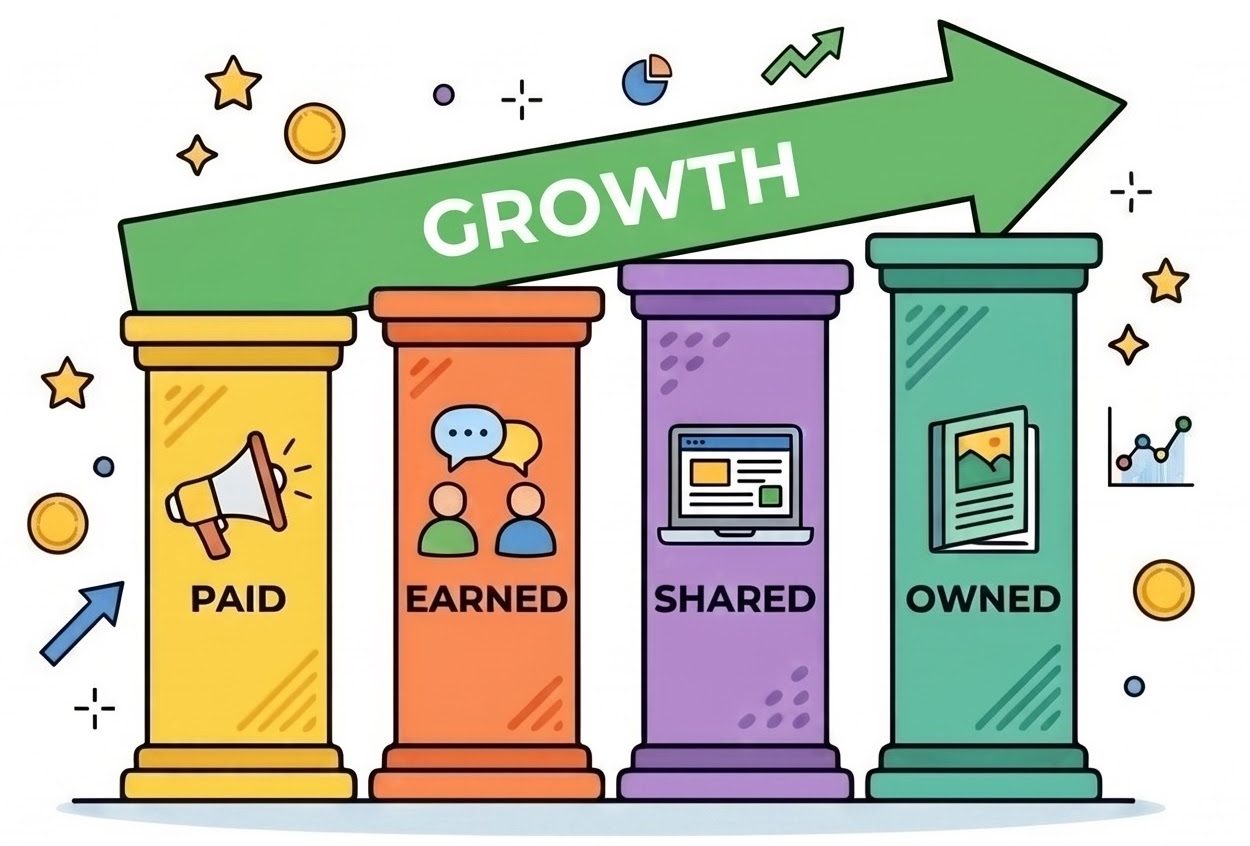
    A powerful framework for this is the PESO model (Paid, Earned, Shared, Owned). Many companies approach PESO in alphabetical order—buying ads first to get attention. However, for a growing business, I advocate for a contrarian sequence: O-S-E-P.

    By following this sequence, you put control and scalability at the heart of your marketing strategy. Instead of wasting resources on campaigns your business isn’t ready to handle, you support every new lead with a system designed for growth. Start by auditing your current assets—your website, CRM, and essential tools—so you’re equipped to capture valuable customer data from the beginning. Laying this groundwork transforms every future investment into a building block for lasting success.

    Owned Media: Your Foundation of Control

    Owned media encompasses every channel you control directly, for example, your website, blog, and email list. In a digital ecosystem, this is your “Command Centre”.

    • The Strategy: For a company with 10 to 50 employees, developing “Owned” channels is no longer just about having a website; it’s about eliminating information silos and reclaiming control from external bottlenecks.
    • Agile Infrastructure: Audit your Website Content Management System (CMS) (e.g., WordPress or Squarespace) to ensure your internal marketing team can update landing pages and pivot strategies instantly without over-relying on agencies and third-party support. 
    • A Single Source of Truth: Your website forms must integrate directly with a Unified CRM (such as Salesforce, HubSpot, or Pipedrive). This integration ensures that customer data flows automatically across departments, preventing the “manual data entry” that leads to errors and employee disengagement.  
    • Scalable Knowledge Assets: Move beyond basic descriptions to create role-based help centres and educational email sequences. These systems enable you to maintain consistent service quality across sales channels, even as your team expands and formal structures emerge.
    • The Power of Control: By first fully configuring these internal channels, you ensure you own your data and your agility. This tactic builds a reliable digital ecosystem to support your first middle managers and protect your profit margins as you prepare for the acceleration of Shared and Paid media.

    Shared Media: Building Community and Trust

    Shared media is engagement on platforms like LinkedIn or review sites. Once your Owned foundation is stable, your Shared efforts rely on the trust you’ve already built.

    • The Strategy: Don’t wait until your website is perfect to start networking. Attend events and build influence simultaneously while continuing to develop and configure your CRM to capture the leads generated by these interactions.
    • Social Media & Networking: Building relationships, by helping others first, creates a robust support network and boosts your brand’s reputation. For example, I started a group called the B2B Cohort to connect with experts I work with and trust. These regular meetings help me learn from others, share my own experiences, and build lasting partnerships. If you’re a founder, you can join industry groups on LinkedIn or Slack, or invite a few peers or clients to a regular online meetup. Even a simple monthly video call to share advice and referrals can make a big difference—what matters most is consistency and support.
    • Review Management: By integrating customer feedback loops into your CRM, you can automatically collect reviews, testimonials, and comments at key points in the customer journey. This integration makes it easy to highlight positive experiences, address concerns promptly, and share customer success stories across your marketing channels. As a result, your team can consistently reinforce trust and credibility with both prospects and existing clients.

    Earned Media: The Right to Be Heard

    Earned media is publicity you gain through organic means, such as media coverage, positive reviews, or being cited as an industry expert.

    • The Strategy: You cannot buy authority; you earn it when your Owned and Shared channels become valuable resources for others.
    • Social Listening & Analytics (Google Analytics, Looker Studio): By tracking which of your insights, articles, or posts are being shared or referenced by others, you can pinpoint the key topics and ideas that resonate with your audience. These “moments of truth” reveal what your audience finds valuable, help you understand your brand’s influence, and show where your expertise is making the strongest impact. This information can guide future content and strengthen your reputation as a thought leader.
    • Data-Driven Insights: When you analyze data from your internal CRM and reporting tools, you can spot important patterns and trends in your industry—such as changes in customer behaviour, emerging needs, or shifts in the market. By turning these insights into original research reports or whitepapers, you provide valuable information that others in your field want to reference and share. This not only earns you organic backlinks from reputable sites but also increases your chances of being featured in news articles and industry publications, further boosting your brand’s credibility and online visibility.

    Paid Media: Accelerating a Proven System

    Paid media is distribution you pay for, like Google Ads or sponsored social posts. In the O-S-E-P model, Paid is not a quick fix for low leads—it is the turbocharger for a machine that is already working.

    • The Strategy: Invest in Paid Media after your internal systems, like your CRM and CMS, are working smoothly. If you run ads to a confusing website or a weak sales process, you are just paying to disappoint potential customers. That said, it’s fine to start using Paid Media while you continue to improve your other channels—take it step by step. For example, begin with small test campaigns focused on a single product or audience segment, set clear goals and budgets, and use these early results to refine your messaging and targeting before scaling up. This gradual approach helps founders avoid overcommitting resources too early and learn quickly from real data. Remember, your advertising will be much more effective if you first strengthen your Owned, Shared, and Earned channels.
    • Ad Targeting & Retargeting: Leverage AI-powered advertising platforms to analyze your existing customer data—such as demographics, purchase behaviour, and engagement patterns—already stored in your CRM. These tools can identify audiences with characteristics similar to your best customers, enabling you to target new leads who are more likely to be interested in your products or services. By focusing your ad spend on these lookalike audiences, you can improve campaign effectiveness and increase your chances of acquiring high-quality customers.
    • RICE Prioritization: Apply the RICE technique—an approach that scores projects based on Reach (how many people will be affected), Impact (the potential effect on your goals), Confidence (how sure you are about your estimates), and Effort (the time and resources required). By evaluating each paid campaign against these criteria, you can prioritize initiatives most likely to deliver significant results and real profitability, rather than spreading your resources too thin or chasing low-impact opportunities.

    The Bottom Line

    Digital Maturity is not about doing everything at once; it is about doing things in the right order. By following the O-S-E-P sequence, you build a resilient, customer-centric ecosystem that maximizes your ROI and ultimately increases your business’s valuation.

    To measure your progress and ensure your marketing investments are making an impact, track key metrics at every stage. Business leaders should pay attention to metrics like conversion rate (how many visitors become leads or customers), Customer Acquisition Cost (CAC—the average cost to acquire a new customer), Customer Lifetime Value (LTV—the total revenue expected from a customer over their relationship with your business), and Net Promoter Score (NPS—a measure of how likely your customers are to recommend your business to others).

    Each of these metrics gives valuable insight into the effectiveness and long-term impact of your marketing efforts. Regularly monitoring these numbers will help you identify where your marketing ecosystem is strong and where there is room to optimize for better results.

  • The ROI of Empathy: Turning Helpfulness into Brand Equity

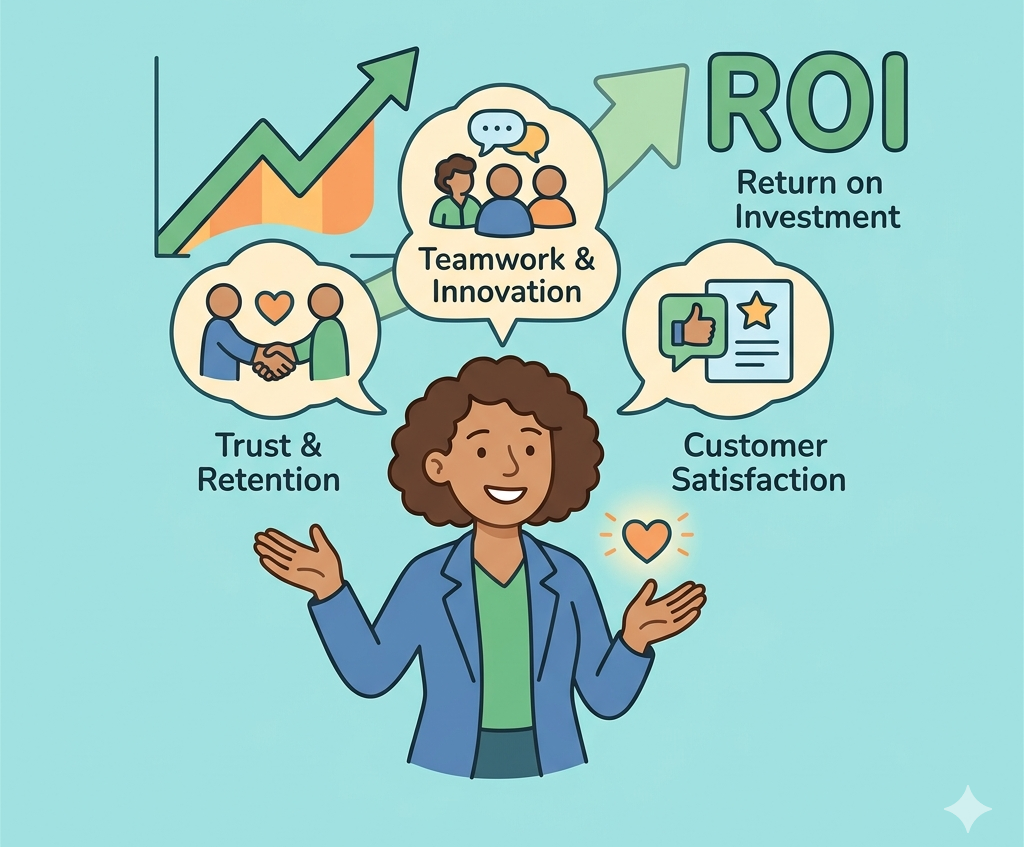
    The ROI of Empathy: Turning Helpfulness into Brand Equity

    One evening, a real estate agent knocked on my door. Normally, I expect a pushy sales pitch and try to end the conversation quickly. But this time was different. Instead of starting with a pitch, the agent told me about a house he had just sold nearby and compared it to other recent sales in the neighbourhood.

    The way he shared information—calmly and helpfully—made me relax. By the time he asked if he could follow up, I felt comfortable providing my contact information. This experience reminded me that the best salespeople don’t push; they guide, using systems that create value long before any deal is closed. In business, those same systems can help every department reinforce a top-tier brand.

    Strategic positioning is about the choices a company makes to create value and stand out from competitors. Many companies view their brand as just an external personality; real brand equity is built through every interaction, inside and outside the company.

    In crowded markets, what distinguishes an average team from the top 1% is often the accumulation of small, unexpected gestures, like reaching out to help without expecting anything in return.

    Proactive Care

    One of the most effective unexpected touches is the immediate follow-up after a sale is closed. Think of the waiter who checks on you a few minutes after serving your meal to ask, “How is everything tasting?” This simple act creates a perception of care and helps the waiter identify and resolve potential issues before they become major frustrations.

    In B2B, this means proactively checking in with customers by asking, “How are you finding our product or service? Can we help with anything?” This approach spares customers the hassle of chasing you for support and lets you catch small issues early, keeping repeat business on track.

    Empathy at Scale: The “Help First” System

    I’ll never forget the time a security guard at a luxury hotel helped us. Just hours before our airport shuttle was scheduled to leave, my son lost his bag containing his laptop and passport. In a panic, we retraced his steps throughout the hotel. A security guard noticed how anxious we were and offered to help. After we explained, he quickly reached out to his team. With just half an hour to spare, they found the bag. When we tried to thank him with a tip, he refused it, saying it was his pleasure to ensure our safety and comfort.

    To earn lasting goodwill and loyal customers, weave empathy into every part of your company. Teams can accomplish this by embedding empathy into daily operations through practical steps: mapping customer touchpoints, identifying opportunities for personal, proactive outreach, and prioritizing actions to encourage active listening and thoughtful follow-up. Establish regular check-ins and team debriefs to surface new opportunities for empathetic service. Use digital tools to prompt helpful actions at key moments.

    For example, imagine reaching out to a prospect 90 days after they chose a competitor. Instead of a sales pitch, you ask: “When we first spoke, you were looking for [Feature X] to solve [Pain Point Y]. Is the solution you chose meeting your goals?”

    When you follow up, you show you listened, remembered their needs, and truly care about their success. If their new provider hasn’t contacted them, the customer may rethink their choice and notice the special value you offer with your proactive, thoughtful service. They might even think, “If they do this for a lost prospect, imagine how dedicated they are to their clients.”

    Scaling the “Top Rep” Impression

    As your company grows from 10 to 50 employees, maintaining informal communication becomes more challenging. To keep your brand relevant, replace gut feelings with structured digital systems. Use your CRM to automate check-ins and prompt meaningful outreach at scale.

    In addition, an Agile CMS (Website Content Management System) helps you tailor your website messaging and share timely, relevant content at each stage of the customer journey. Use digital tools to help your team show empathy at every interaction.

    Nurture Pillar: Anticipatory Helpfulness (CRMs)

    In a manual system, sales reps only help when asked. In a top 1% systemic approach, the CRM helps teams offer help before the customer realizes they need it.

    • HubSpot/Salesforce: Track product usage gaps with these tools. When a client hasn’t logged into a key feature in 30 days, the CRM automatically prompts a value check-in. Rather than making a sales call, the rep sends a personalized video or guide tailored to that underused feature.
    • Pipedrive: Use its visual interface to spot stalled deals and know when to offer extra support. When a deal gets stuck, the system alerts the rep to send a relevant case study or guide tailored to the specific challenge.

    Service Pillar: Proactive Support (Service Platforms)

    True empathy in service is moving from reactive ticketing to proactive resolution.

    • Intercom/Zendesk: Don’t wait for a service ticket—set up Intercom’s automated bots to check in with customers after they reach a key milestone, like completing their first 10 transactions. The bot asks, “You just hit a milestone! Is there any manual step we can help you automate next?”
    • Freshdesk: Leverage AI-driven deflection tools to deliver instant expertise. The moment a customer starts typing a question, the system proactively presents the most relevant answer or tip. This not only saves customers time but also provides immediate, high-value support at their exact moment of need.

    Experience Pillar: Tailored Knowledge Sharing (CMS & Automation)

    Scaling helpfulness means delivering the right information at the moment of truth.

    • WordPress/HubSpot Content Hub: Use a flexible CMS to build role-based help centres. Instead of a generic FAQ, the system determines whether the user is a manager or an end user and provides content tailored to their tasks.
    • ActiveCampaign: Go beyond newsletters. Create an educational sequence that starts when a customer buys a product. Over the next 60 days, send them helpful tips to ensure they get the most value from their purchase. This process helps prevent customers from missing out on features and reduces the chance they’ll stop using your product.

    Commerce Pillar: Frictionless Transitions (eCommerce & Documentation)

    Empathy in commerce means making it simple for customers to say yes.

    • PandaDoc/DocuSign: Connect these tools to your CRM. Then, when your sales team sends quotes to repeat customers, all fields are filled in automatically. This saves customers time, since all they need to do is review and sign your offer.
    • Shopify/BigCommerce: Set up automated replenishment reminders. If a customer usually runs out of a product every 45 days, send a helpful reminder at day 40 with a one-click reorder link. This process shows you’re proactively supporting their business, keeping their operations running smoothly.

    The Bottom Line: Differentiation Through Quality

    Brand equity protects a company from commoditization and growing competition. Distinctive brands that stand out from the crowd can command higher prices and build deep customer loyalty.

    Start by supporting your teams. Employees are among your company’s greatest assets, and technology should make their jobs easier, not harder. With the right tools, your team can move beyond simple transactions and focus on building real relationships, just like the top 1% of companies.

    Facilitate adoption by offering onboarding sessions that demonstrate how new systems improve daily work. Provide hands-on training using real-world examples, and recognize employees who embrace the tools and share positive feedback. Continue supporting your team and communicating the value of these tools, so everyone can adapt and maximize your investment.

    Are your systems enabling excellence or just transactions?

    Audit your processes to identify where you can inject empathy into customer and employee interactions. Start by selecting one part of your customer journey, such as sales follow-up or onboarding, and pilot a new empathy-driven approach.

    Invite team feedback, track results, and refine your systems based on what you learn. By making small, intentional changes now, you pave the way for a culture of lasting brand equity and loyalty.


  • Customer Retention Strategies: Why Proactive Communication Beats Silence for Loyalty and Growth

    Customer Retention Strategies: Why Proactive Communication Beats Silence for Loyalty and Growth

    In the world of recurring services, we often fall into the trap of believing that “no news is good news.” We assume that if a customer isn’t complaining and their payments are clearing, they are satisfied.

    But there is a dangerous line between a loyal customer and a neglected one.

    The Ghost in the Data

    I recently sat down with my father to help him organize his home and auto insurance renewals. My Dad is the kind of customer every company dreams of: loyal to a fault, having stayed with the same provider for decades. However, through the years, his original broker was acquired—not once, but twice.

    As we went through the paperwork, I felt a knot tighten in my stomach. Stacked on his desk were invoices that still listed his wife—my stepmother—as the primary contact. She passed away nearly ten years ago.

    In that decade, through two acquisitions and countless automated renewals, no one from the company had reached out to check in. Because they remained silent, my Dad was left with policies that didn’t fit his current life, causing him to overpay for years.

    The Trust Gap

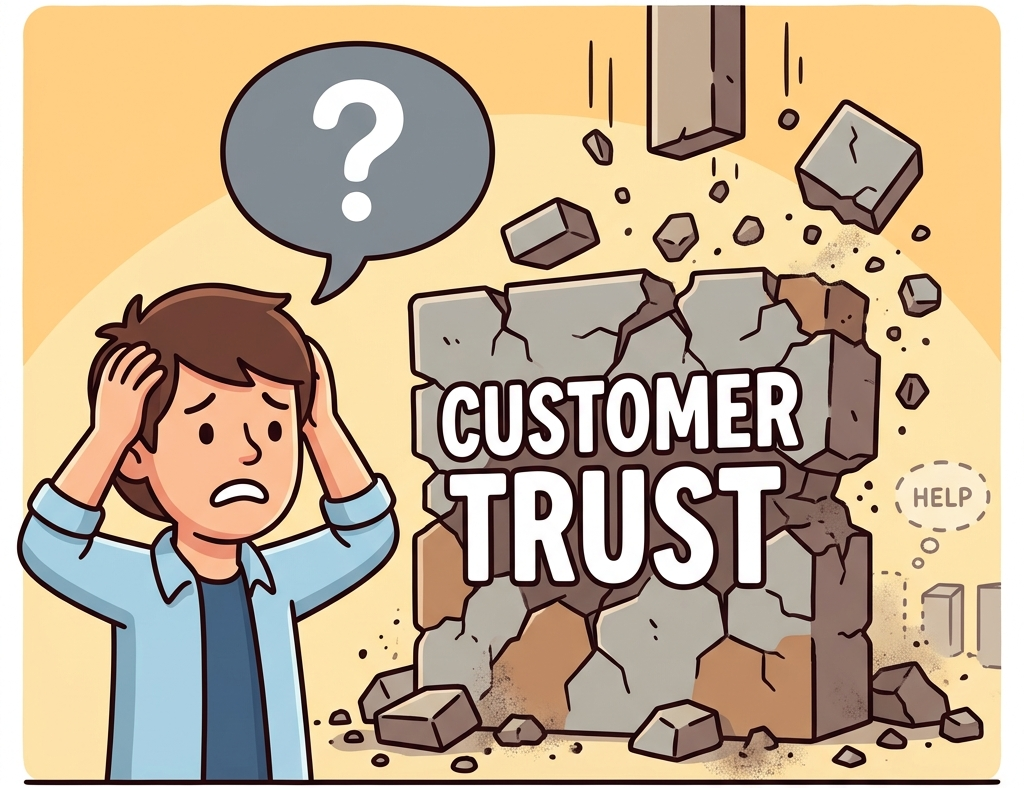
    When I saw my stepmother’s name on those bills, my perspective shifted instantly. I wasn’t just looking at a clerical error; I was looking at a decade of invisibility. My stress level hit its peak, and my loyalty to that brand evaporated. I stopped looking for a way to fix the policy and started looking for a way out.

    We eventually reached an exceptional customer representative who resolved the issues, but the damage had already occurred. Exceptional service at the point of crisis is just damage control. True brand equity is built in the years leading up to the crisis.

    Scaling the Human Touch

    How do you prevent your most loyal customers from feeling like ghosts in your system? The answer lies in a hybrid approach: using automation to catch the details and humans to build the connection.

    For example, imagine a long-term client whose policy hasn’t changed in several years. An automated system flags this account as overdue for review, prompting a personal outreach from a customer representative. During a brief call, the rep learns of recent life changes—such as a death in the household—and updates the account to ensure better coverage and pricing. The customer not only feels seen but also valued, turning a routine check into renewed loyalty.

    Here are some actions to initiate scaling with the human touch:

    • Automated Triggers (The Pulse): Use your CRM to flag stagnant accounts. If a policy or service hasn’t been updated or reviewed in the past 3 years, the system should trigger a mandatory “Account Wellness Check” rather than a standard renewal notice. To set this up: Most modern CRMs allow for custom filters and workflow triggers. Start by creating a filter for accounts with a “last policy review date” older than 3 years. Then, configure an automated workflow that assigns a task or sends a notification to a designated team member, prompting them to reach out for a review. Schedule a recurring report that highlights these accounts monthly to ensure they are never overlooked.
    • Data Hygiene: Automated systems should cross-reference life events or public records (when appropriate) or include an “Update Your Life Status” prompt that is more than a checkbox in a portal.
    • The Human Intervention: When a customer hits a certain loyalty milestone (e.g., 5, 10, or 20 years), it should trigger a personal outreach. A fifteen-minute “reconnection” call can identify changes in needs that an algorithm will never see, and it proves someone is actually watching the shop. Of course, scaling personal outreach across an entire customer base can be daunting. To manage this effectively, prioritize high-value or at-risk accounts for direct outreach first, and use a tiered approach for the rest: offer personalized messages or check-ins to your top tier, and then combine automation with lighter-touch human interactions (such as customized emails) for the rest. This ensures that your most valuable relationships get the attention they deserve without overwhelming your team.

    How to Audit Your Legacy Customer List

    Don’t let your oldest fans fall through the cracks. Perform a “Legacy Audit” once a year using these three steps:

    1. Identify the Untouched: Filter your database for customers who have been with you for 5+ years but have had zero non-automated interactions in the last 24 months.
    2. The Right-Size Test: Pick 20 legacy accounts at random. See if the amount they pay matches your current best offerings. If they are paying for outdated services, call them to offer better options and turn at-risk customers into loyal ones.
    3. The Life-Event Check: Revise your intake and review forms to ask clear questions about household size (for consumer sales), business scale (for business sales), or your customers’ current priorities. Make it easy for people to explain their present situation. Don’t rely on old data—keep your information up to date.

    The Bottom Line

    If your customers only hear from you when the bill is due, you aren’t a partner; you’re a utility. And in a world of endless options, utilities are easily replaced. Don’t wait for your customer’s child or advocate to find a decade-old mistake. Reach out before the silence becomes too loud to ignore.

  • Maintenance versus Momentum: How to Scale Valuation with the Right Frameworks

    Maintenance versus Momentum: How to Scale Valuation with the Right Frameworks

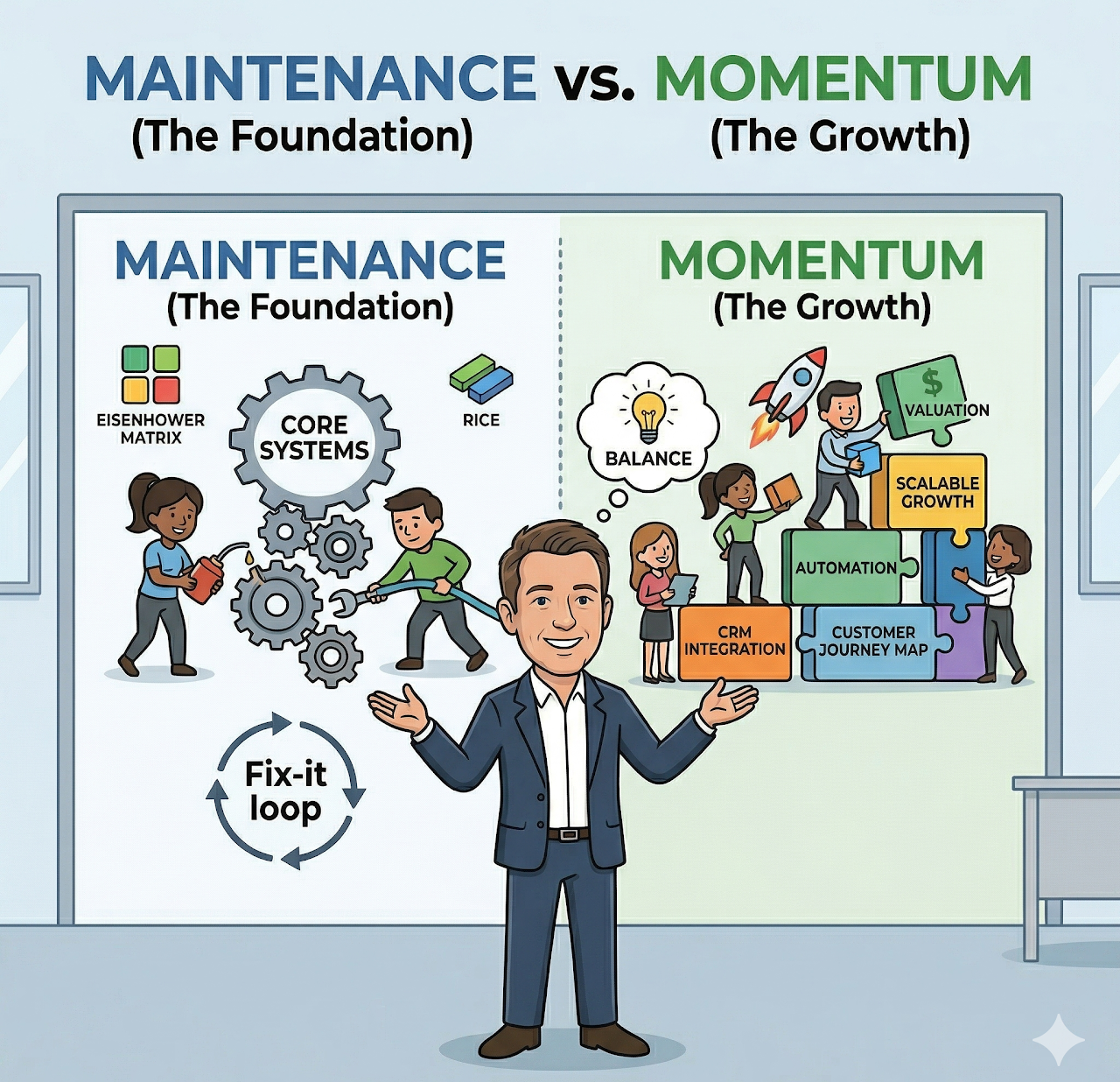
    In the digital environment, maintenance involves urgent fixes that prevent system failures. Momentum, by contrast, is achieved through deliberate, incremental efforts to build digital maturity, ensuring your technology evolves with your business.

    To make this transition, set up a system that helps you focus on growing your business. Use tools like the Eisenhower Matrix, RICE, and EOS “Rocks” to move from reacting to problems to creating long-term value.

    Categorize with the Eisenhower Matrix

    The Eisenhower Matrix is a simple decision-making tool that helps you prioritize tasks based on their urgency and importance.

    The first step is to distinguish between what is urgent and what is important. In many growing businesses, technology becomes a cost center when leadership treats every request as an immediate issue.

    • Urgent & Important (The Fixes): A broken e-commerce checkout or a security breach requires immediate action to preserve your current valuation and prevent customer churn.
    • Important but not urgent projects (The Innovation), such as CRM integration or customer journey mapping, are often overlooked because they lack immediate deadlines. However, these initiatives are essential for long-term profitability.

    Automate The Noise (Urgent & Not Important)

    Many businesses experience stalled growth due to tasks that seem urgent but offer little long-term value, such as manual data entry or relaying messages between departments.

    When your team is focused on these tasks, their skills go underutilized as they spend time on manual work rather than high-value activities. Implementing marketing automation and CRM integrations can eliminate these repetitive tasks, freeing your team to concentrate on relationship-building and strategic initiatives that drive business growth.

    Prioritize with RICE

    After identifying important projects, the list may still seem overwhelming. Apply the RICE technique to evaluate and prioritize each opportunity objectively:

    • Reach: How many customers or staff will this fix benefit?
    • Impact: How much will this improve the customer experience or your bottom line?
    • Confidence: How sure are we about these projected gains?
    • Effort: How much time and money will it take from your team?

    Using RICE to evaluate your backlog ensures your team prioritizes high-impact, low-effort improvements. This approach reduces reliance on intuition and helps avoid costly, underused solutions.

    Execute with EOS Rocks

    Even with a prioritized list, daily operations can hinder innovation. The EOS (Entrepreneurial Operating System) addresses this challenge through the concept of Rocks.

    A Rock is a priority that teams commit to completing within the next 90 days. For a business approaching 20 employees, a MarTech Rock could be migrating sales data from spreadsheets to a CRM. Assigning a project as a Rock helps shield it from less important, repetitive tasks that can distract your staff.

    How the Frameworks Work Together

    • Eisenhower Matrix (The Filter): Categorizing Fixes versus Innovation. Preservation: Prevents brand damage and churn.
    • RICE Scoring (The Objectifier): Selecting the most cost-effective project. Growth: Targets high-ROI improvements.
    • EOS Rocks (The Protector): Ensuring 90-day execution without distraction. Scalability: Proves your business is built on systems, not individual heroics.

    The Bottom Line: Preservation versus Growth

    Time spent managing incompatible systems reduces the time available for high-value, relationship-building activities.

    Urgent fixes help preserve your business value and prevent loss.

    Planned innovation increases your business value. With RICE and EOS, you create a unified digital ecosystem with efficient data flow and engaged staff, setting up a turnkey operation. For entrepreneurs planning an exit in the next five years, this momentum is key to achieving a premium valuation multiple.

    Do not wait for a crisis to prompt action. Begin by creating a Customer Journey Map to identify your first Rock and start building the momentum your business needs.

  • Prioritize Your Customer Journey Gaps with the RICE Framework (Don’t Try to Fix Everything at Once)

    Prioritize Your Customer Journey Gaps with the RICE Framework (Don’t Try to Fix Everything at Once)

    Digital Transformation can seem daunting, especially when businesses attempt to address every issue simultaneously. To achieve Digital Maturity, focus on making targeted, incremental improvements rather than sweeping, disruptive changes. As a concrete first step, assemble a cross-functional team and schedule a dedicated customer journey mapping session. This approach helps you quickly turn your intentions into action and build early momentum.

    Mapping Friction Points in Your Customer Journey

    Before you buy software, identify where your process hurts. The Customer Journey Map (CJM) is a visual story of every experience your customer has with your brand. To create a CJM, start by gathering direct customer feedback and internal insights to understand pain points. Next, map out each key touchpoint your customer encounters across departments. Finally, analyze the collected data to spot gaps and opportunities for improvement. A thorough CJM identifies:

    • Friction Points: Specific gaps between departments where the ball is dropped.
    • Customer Emotions: How these gaps make customers feel—frustrated, ignored, or like they are doing your job for you.
    • Staff Impact: How clunky tools lead to low morale, disengagement, and hours of wasted manual labour.
    • Root Causes: Pinpointing exactly where and why a breakdown happens (e.g., a website form that only sends an email instead of syncing with your CRM).

    From To-Do List to Agile Backlog

    Once you have your list of friction points, it’s natural to feel a bit overwhelmed by the number of possible solutions. It’s common to start with a straightforward to-do list, often inspired by gut instincts or the latest marketing trends.

    Instead, we create an Agile Backlog. Unlike a static to-do list, a backlog is a living collection of opportunities prioritized by:

    1. Customer Relevance: Does this solve a “moment of truth” for the buyer?
    2. Value Proposition: Does this project reinforce your unique brand promise?
    3. Measured Effort: We weigh the business value against the actual technical heavy lifting required.

    Scoring with RICE: A Customer-Centric Filter

    To objectively narrow the backlog, we use the RICE technique. This step ensures you focus on high-impact, low-effort opportunities first. Assign a score to each of the four RICE factors using a simple scale:

    • Reach: Estimate how many customers will be affected by the change over a given timeframe (e.g., weekly or monthly). Use concrete numbers, such as 200 users per month, to keep estimates consistent.
    • Impact: Score the potential outcome for each initiative on a scale of 3 (massive), 2 (high), 1 (medium), and 0.5 (low).
    • Confidence: Rate how certain you are about your estimates, using a percentage (e.g., 100% for full confidence, 80% for good data, 50% if assumptions are less certain).
    • Effort: Estimate the total amount of work required, measured in person-weeks or another fixed unit, and use whole numbers for clarity.

    By quantifying each area upfront, you help your team apply the RICE method consistently and transparently when prioritizing what to tackle first.

    • Reach: How many customers will benefit from this fix?
    • Impact: How much will this improve the customer experience or your bottom line?
    • Confidence: How sure are we about these projected gains?
    • Effort: How much work (time/money) will it take from your IT team or contractors?

    By filtering your technology opportunities through RICE, you ensure your team focuses solely on improvements that drive retention and profitability.

    The Bottom Line

    Pick one friction point and one project. Measure the improvements, iterate, and move forward steadily. To track progress and demonstrate impact, select a few key metrics to monitor before and after each change. Useful metrics include customer satisfaction scores (such as NPS or CSAT), process time or cycle time for the affected workflow, and customer retention rates. Tracking these metrics helps you communicate tangible results to stakeholders and keeps the team aligned on real progress.

  • The Project Manager Trap: When Your Customer Starts Doing Your Job

    The Project Manager Trap: When Your Customer Starts Doing Your Job

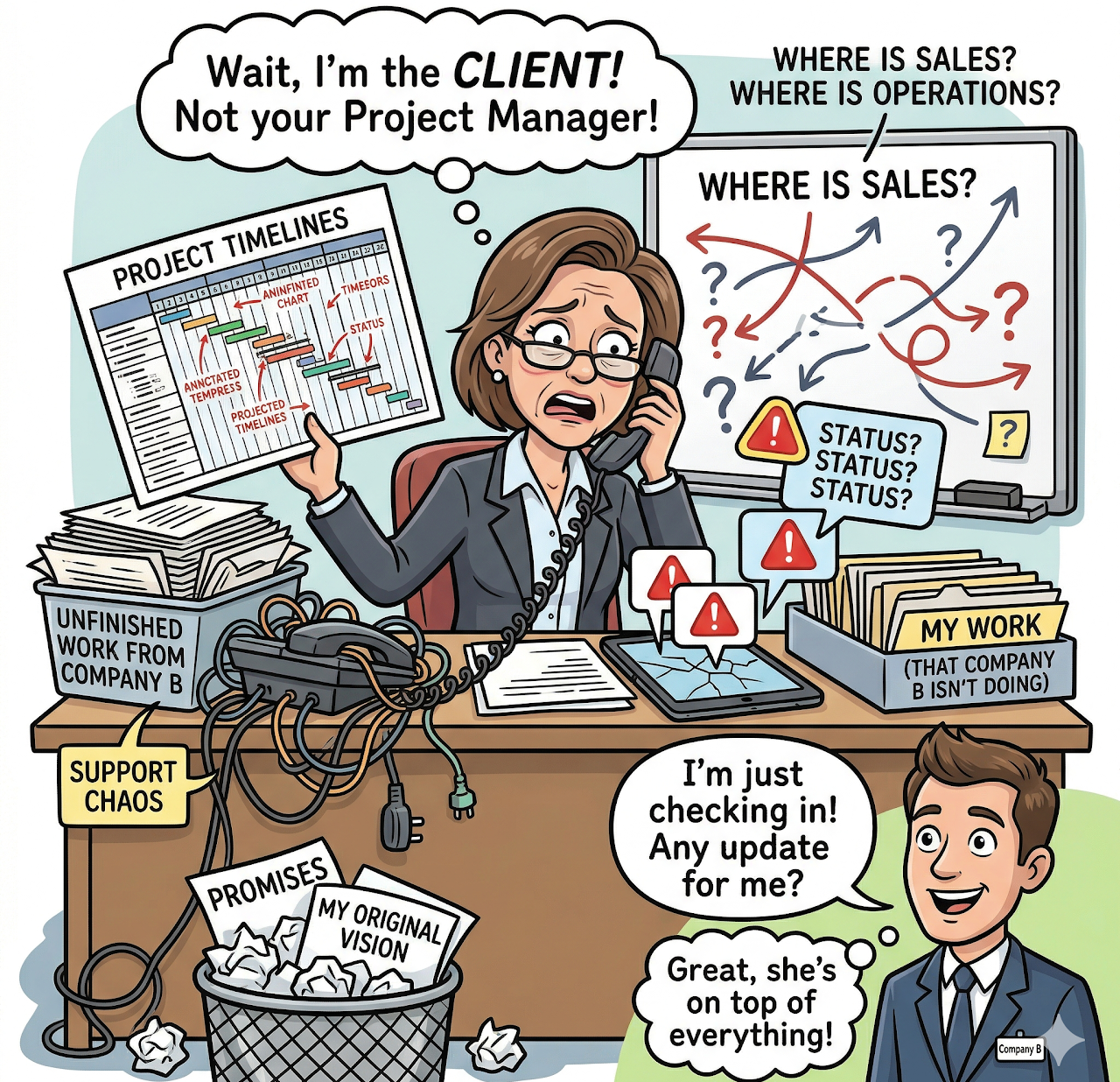
    Nothing signals a breakdown in your digital maturity faster than when your customer stops being a client and becomes your unpaid project manager.

    When you first started your business, you likely kept all your customer details in your head. Communication was informal, and you personally kept every customer promise. But as you scale past 10 or 20 employees, that founder’s intuition is no longer enough.

    If your technology stack isn’t keeping up, your customer pays the price. Here are three signs that your client has fallen into the Project Manager Trap:

    1. The Broken Record Syndrome: In our previous discussion on Data Silos, we noted how frustrating it is for a frontline employee to admit, “I have no idea.” From the customer’s perspective, this forces them to repeat their story to three different people—Sales, Support, and Operations—to get a simple update.
      • The Churn Signal: If a client starts every email with “As I told your colleague yesterday…”, they are already looking for the exit.
    2. The Customer is the One Chasing: In a healthy digital ecosystem, automation triggers internal handoffs. When a deal closes, the warehouse should already have the shipping instructions. If those loops are broken, the customer becomes the “messenger bird” between your departments.
      • The Churn Signal: When the client initiates every status check, they aren’t experiencing your service; they are managing your workflow.
    3. High-Friction How-To Surges: If your onboarding process isn’t digitized or your documentation is buried, customers will flood your inbox with basic operational questions. This is a sign of underutilization, not of your staff, but of your value.
      • The Churn Signal: Your customers are spending so much energy trying to figure out how to work with you that they have no energy left to appreciate the results you deliver.

    How to Rescue Your Customer

    The goal of digital transformation isn’t just to buy software; it’s to build a system that lets the wheels turn smoothly so you can captivate your audience. Start by mapping one key customer journey from their first contact to a completed transaction. This simple step will reveal exactly where customers experience friction, helping you take immediate action.

    1. Map the Hand-offs: Use a Customer Journey Map to identify exactly where the client must take the lead. A journey map outlines each step your customer takes when interacting with your business, helping you clearly see pain points and opportunities to improve the experience.
    2. Automate the Silent Tasks: Use CRM integrations to ensure that when a customer provides a detail once, it lives everywhere. Popular platforms like HubSpot, Salesforce, and Zoho CRM make it easy to connect your sales, support, and operations data. Talking about and using these tools makes it easier to start automating, so your team can concentrate on the most important work.
    3. Audit the Effort: Ask yourself: “How many steps did my customer take this week that my systems should have handled?” To make this easier, keep a simple weekly log or checklist. Any time a customer needs to follow up or take action, that’s a sign your system should be doing it automatically—not the customer. Tracking these moments makes it clear where the friction is, so you know exactly where to focus your improvements.

    The Bottom Line

    Happy teams lead to happy customers. When you remove the friction that forces your customer to do your job, you return their time to them. And time is the ultimate premium asset.

  • The AI Window: Turning Complex Tech Stacks into Simple Conversations

    The AI Window: Turning Complex Tech Stacks into Simple Conversations

    When businesses think about artificial intelligence, they often envision complex, standalone robots or expensive new software platforms. However, the true power of AI for growing businesses lies in its ability to act as a “window”—a simple, conversational interface into the complex tools you already own. For example, imagine a retail company where the sales manager wants quick insights from their CRM and inventory systems. Instead of logging into multiple dashboards and running complex reports, the manager can type a question such as “How did our holiday promotions impact inventory turnover last week?” into an AI-powered chat interface. Within seconds, the AI presents clear answers by pulling data from across existing platforms, saving valuable time and making critical information available to anyone, regardless of technical skill.

    Despite the exciting potential of AI to automate repetitive tasks like campaign management, its introduction often triggers anxiety within teams. To successfully integrate AI, leaders must understand both the technological shift it represents and the human fears it can unintentionally amplify.

    The AI Window: Democratizing Your Data

    Small and medium-sized businesses often struggle because their most valuable data is locked inside complex Customer Relationship Management (CRM) platforms, customer service portals, and eCommerce dashboards. In the past, extracting actionable insights from these platforms required specialized analytical skills.

    AI changes the interface of work. Instead of spending hours learning how to pull a complex segmentation report in Salesforce or Google Analytics 4, any employee can use a chat-based AI interface to ask, “What were our top-selling products last week?” or “Which leads are most likely to close?”

    As the BDC notes, using AI to analyze vast amounts of customer data for precise segmentation was once costly and complex, but it is now much simpler and more efficient. Even customer service chatbots, which used to be rigid “if-then machines,” now require little input and can intelligently guide users through the sales funnel. By turning complex databases into simple conversations, AI democratizes your data, making your existing tools accessible to members of your team.

    The Human Element: Managing the Fear of Obsolescence

    While the technology is accessible, the human response is often complicated. Users have mixed feelings about AI, and some staff members hesitate to explore it, fearing it may take their jobs.

    It is crucial to recognize that this fear does not exist in a vacuum. Challenging economic times and global insecurity are heightening staff concerns about job loss. The business environment remains highly volatile, marked by geopolitical tensions, the upheaval of the world order, and evolving trade tariffs.

    When employees are already stressed by macroeconomic uncertainty, introducing an AI tool can feel like a direct threat to their livelihood. If leaders do not consider these elements and create safe, open forums for staff to raise their concerns freely, they risk misunderstanding their team’s reactions. What looks like stubbornness or complacency inertia is often just a plea for job security.

    Curing Underutilization with Smart Tech

    The irony is that while staff fear AI will replace them, many are currently suffering from the opposite problem. A recent report from the ActivTrak Productivity Lab revealed that 20% of employees are disengaged due to ongoing underutilization—a 67% increase since 2021. Your team is likely bogged down by the friction of manual data entry and inefficient processes, preventing them from doing high-value, creative work.

    To bridge this gap, leaders must guide the human side of software adoption using transparent communication and structured training. Research shows that clear information flow is key to overcoming organizational resistance. Practical communication actions can make a significant difference. Establish regular Q&A sessions where employees can ask questions about new AI tools, voice concerns, and receive clear answers. Introduce anonymous feedback surveys to help surface worries and suggestions that team members might hesitate to share aloud. Organize small-group discussions or open forums to encourage dialogue between teams and leadership, allowing them to raise and discuss concerns directly. Appoint key staff as ‘AI Champions’ who employees can approach with questions at any time. By weaving these actions into the adoption process, leaders can foster a culture of openness and address resistance before it grows.

    Here is how you can successfully implement the “AI Window” while protecting your team’s morale:

    • Invest in Training: The BDC emphasizes that your AI tools will only be as good as your team’s willingness and ability to use them. Do not assume staff know how to use AI just because they’ve heard of it. Provide dedicated training programs. A strong training program should offer hands-on practice with the specific AI tools your team will use, not just theoretical overviews. Include role-specific modules that help employees learn to apply AI to their unique workflows. Make ongoing support available—through follow-up sessions, user guides, and accessible points of contact—so staff can continue to deepen their skills and troubleshoot challenges as they arise.
    • Consult the End Users: Before rolling out an AI assistant, consult your staff to understand their preferences, skills, and exact pain points.
    • Reframe the Tool: Explicitly communicate that AI is an assistant, not a replacement. Show your team how AI can handle the manual drudgery, freeing them up to focus on the complex scenarios, strategic thinking, and relationship-building that only humans can do.

    The Bottom Line

    AI has the potential to make your entire digital ecosystem more accessible and efficient. However, technology alone cannot drive growth. By recognizing your team’s fears, validating the economic pressures they feel, and empowering them through empathetic training, you can turn AI from a looming threat into a powerful window of opportunity.

    To get started, consider this simple action plan:

    1. Assess your team’s workflows and identify where AI could address routine or time-consuming tasks.
    2. Consult directly with employees to understand their needs, answer questions, and gather input on key pain points.
    3. Pilot an AI tool on a small scale, gather feedback, and adapt your approach before wider rollout.

    These steps will help ensure a smoother, more confident transition as you bring AI into your business.

  • From Commoditized to Premium: What a Car Wash Can Teach You About Digital Maturity

    From Commoditized to Premium: What a Car Wash Can Teach You About Digital Maturity

    If you listen to the recent car wash episode of the podcast The Economics of Everyday Things, you quickly realize that the industry has completely shed its Breaking Bad stereotype.

    Historically, car washes were labour-intensive, weather-dependent, and highly commoditized businesses. Owners were like farmers, constantly watching the sky and hoping for a sunny weekend to drive sales. Today, however, the car wash industry is a $16 billion digital powerhouse. By embracing technology, operators have transformed a basic service into a highly profitable, automated machine that is attracting massive private equity investment.

    There is a vital lesson here for growing Canadian businesses. The Business Development Bank of Canada (BDC) notes that 1 in 5 entrepreneurs plan to close, transfer, or sell their business in the next five years. If you want to secure a high valuation multiple when you exit, you cannot be a traditional, analog company. You need to build Digital Maturity.

    A good starting point is to assess your current digital tools and processes. Begin by mapping all the key touchpoints your customers have with your business, then identify where technology supports them. This quick audit will help you see where your operations are strong and where there may be gaps to address on your path to digital maturity.

    Here is what the modern car wash can teach you about using technology to turn a commoditized business into a premium asset.

    Shift to Recurring Revenue (The Transact Pillar)

    The Car Wash Lesson: Modern express washes no longer wait for customers to decide their cars are dirty. Instead, they affix an RFID sticker to your windshield and sell you an unlimited monthly membership. When you pull up, the gate opens automatically. By shifting to a subscription model, they have decoupled their revenue from the weather and secured predictable, recurring income.

    The Business Application: Buyers pay a massive premium for predictable cash flow. In this context, the Transact pillar refers to the core processes, systems, and touchpoints where your business generates revenue—essentially, how customers buy from you and how you fulfill those transactions. Evaluate your Transact pillar to see where you can remove friction and create recurring revenue streams. Whether you use e-commerce platforms like Shopify or digital contracting tools like PandaDoc, turning one-off transactions into automated subscriptions or retainers fundamentally increases the value of your business.

    Digitize the Founder’s Intuition (The Nurture Pillar)

    The Car Wash Lesson: In the past, human attendants had to manually adjust the wash process for a small sports car versus a large pickup truck. Today, modern car washes use artificial intelligence, sonar, and cameras to instantly read a vehicle’s exact contours and automatically personalize the delivery of water and soap.

    The Business Application: Many businesses with $1M to $10M in revenue rely heavily on the founder’s intuition or a star salesperson who holds all the customer knowledge in their head. If that person leaves, the business value plummets. To attract buyers, you must digitize this intuition with a unified CRM (such as HubSpot, Salesforce, or Pipedrive). A clean CRM captures customer preferences, sales pipelines, and communication history. When a buyer looks at your business, a perfectly documented CRM proves that your company’s success is built on scalable systems, not just individual heroics.

    If implementing a CRM feels daunting, start with a simple system that covers your core needs and expand later as your team grows more comfortable. Involve key staff early in the process, so they can share input on workflows and feel more invested in adopting the new tool. This approach will increase buy-in and ensure your CRM delivers real value from day one.

    Maximize Revenue per Employee with High Software Engagement

    The Car Wash Lesson: A legacy car wash used to require 12 to 25 employees to operate. Today, thanks to automation, a modern, high-volume car wash requires just three employees.

    The Business Application: A simple, powerful metric to benchmark your company’s production level is Revenue/Employee. The goal of digital transformation is not to replace your team, but to empower them to do significantly more with less friction. By automating repetitive tasks, your staff can focus on high-value, customer-centric work.

    However, simply buying software doesn’t increase your Revenue/Employee ratio. If your staff is frustrated and reverting to manual workarounds (like spreadsheets), your expensive software is just shelfware. To prove to potential buyers that your systems are fully functional, you need to demonstrate high adoption rates. Running a Software Engagement Check-Up helps you identify and fix the roadblocks your employees face. A Software Engagement Check-Up typically involves surveying your team on how they use key digital tools, reviewing user analytics and login data, and having conversations to understand pain points and training needs. By systematically assessing usage and addressing barriers, you ensure your technology investments actually deliver value. High software engagement proves that your team is fully leveraging your digital ecosystem, making the business a turnkey operation for the next owner.

    The Bottom Line

    Car washes prove that there is no such thing as a boring industry—only outdated business models. By implementing recurring revenue, digitizing your customer data, and maximizing your team’s software engagement, you can increase your Revenue/Employee ratio and build a highly attractive, premium business.

    If you are planning to exit in the next five years, don’t wait. Let’s start with a Customer Journey Map to identify where we can digitize your operations and maximize your eventual valuation. A Customer Journey Map is a visual tool that shows every interaction a customer has with your business, from their first discovery to the final sale and beyond. By mapping out these key touchpoints, you gain clarity on where technology can streamline processes, reduce friction, and uncover growth opportunities. Taking this first step makes the path toward digital maturity practical and approachable for any business owner.

  • Overcoming Complacency Inertia: Why Your Team is More Ready for Tech Than They Think

    Overcoming Complacency Inertia: Why Your Team is More Ready for Tech Than They Think

    Picture Sandra, a skilled project manager who has delivered results for years, now feeling adrift as headlines about AI breakthroughs fill her newsfeed. In meetings, she wonders if she’s falling behind while her peers test the latest AI tools. The routines that once anchored her confidence now feel shaky as she worries: Is everyone else leapfrogging ahead?

    The pace of technological change, especially with the rapid rise of AI, is staggering. For many employees, this creates a severe case of FOMO (Fear Of Missing Out) mixed with genuine anxiety. They look at the headlines and assume everyone else is light-years ahead of them.

    While leaders worry about burnout from rapid change, a bigger threat is underutilization. A recent ActivTrak Productivity Lab report found 20% of employees are disengaged due to underutilization—a 67% increase since 2021. High-performing tech and professional firms see disengagement rates of just 6–8%. Average organizations face two to three times more disengagement, leading to lost productivity, weaker morale, and real bottom-line impact.

    Your team is disengaged because they are trapped doing high-friction, low-value work. Instead of treating resistance as an individual flaw, leaders and teams can name this shared challenge and rally around solving it together. By collectively confronting inefficient workflows, you can turn frustration into an opportunity: freeing up time and energy for more meaningful, impactful projects. Recognizing this mutual opportunity helps convert anxiety into proactive energy—making the case for change something everyone has a stake in, not just something imposed from above.

    The Psychology of Complacency Inertia

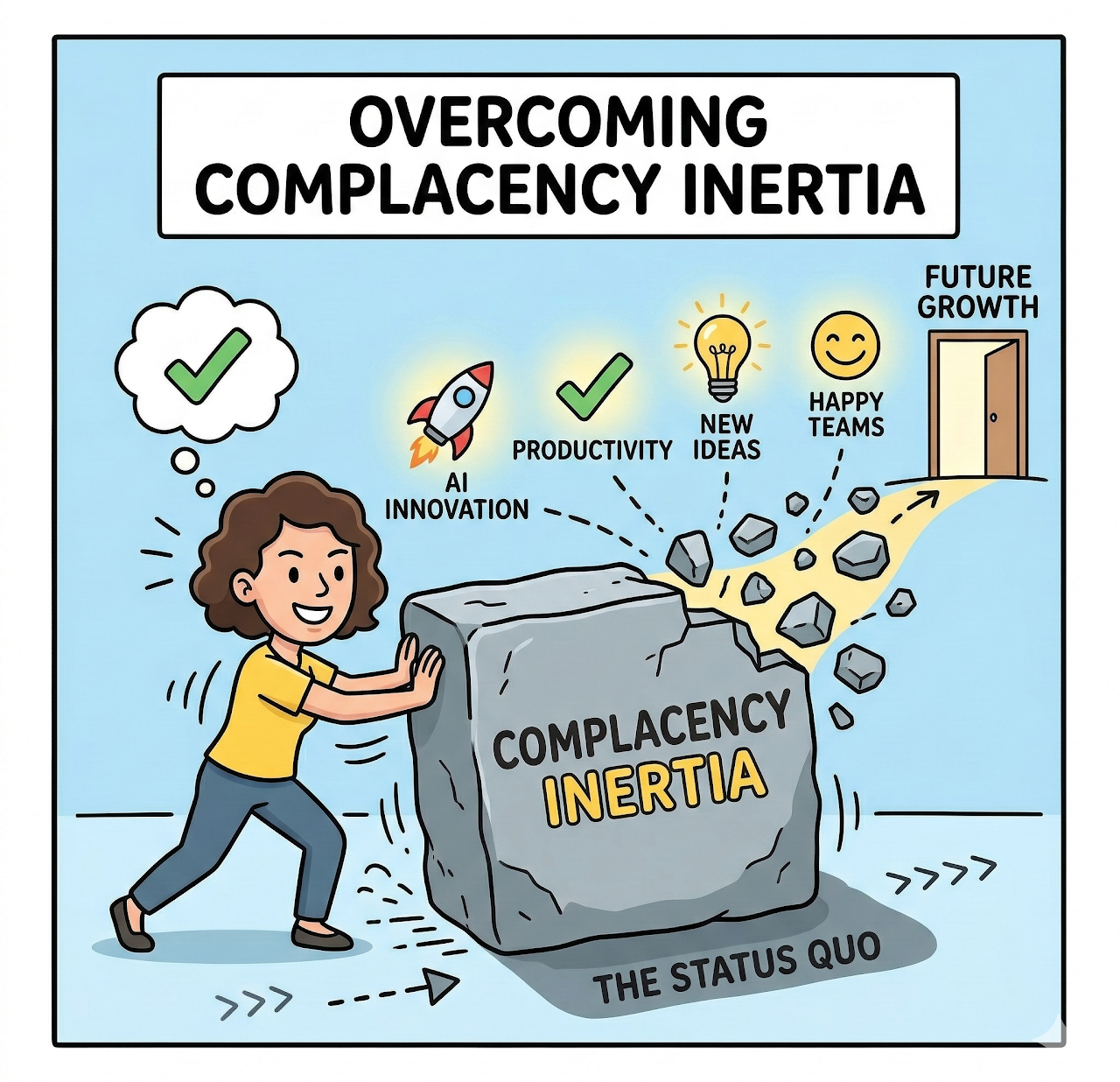
    When you roll out a new CRM, automation platform, or AI tool, resistance is rarely about the software itself. Most hesitation stems from complacency inertia and psychological switching costs. Rather than guessing at the reasons, leaders can surface hidden fears by asking open, reflective questions—like “What concerns do you have about using this tool?” or “What parts of your workflow might be disrupted?” These conversations reveal anxieties and model the supportive relationships teams need to move through change.

    Employees resist because the effort required to learn a new system threatens their established routines and current sense of competence. They know how to succeed using their current, albeit clunky, manual workarounds. A new system makes them feel like beginners again, triggering the “we’ve always done it this way” mentality.

    The Reality: Your Staff is Already Tech-Savvy

    Here is a truth I have discovered when guiding companies through change management exercises: your staff typically know and understand new technology much better than they admit or think they do.

    Not every team member adopts new tools at the same pace. Your workforce includes “innovators” eager to try new solutions, an “early majority” who need proof of success, and a “late majority” who require more reassurance and support. Identify where each group stands, then tailor your approach: champion innovators as advocates, offer extra resources to the early majority, and provide patient, hands-on help to the late majority. This ensures everyone is supported at their stage of adoption.

    Because of the fast pace of the AI boom, they assume everyone else is further ahead. In reality, we are all living in an always-on digital ecosystem. Your employees interact with complex algorithms, intuitive apps, and advanced technology every single day in their personal lives. Because they live with it daily, they are intrinsically better prepared for workplace tech innovation than they give themselves credit for.

    Here’s a 90-day roadmap to make this journey concrete for your team:

    First 30 days: Focus on building awareness and setting expectations. Introduce the upcoming changes in an all-hands meeting and clearly outline both the benefits and potential challenges. Assign change champions or super-users who will act as support points for their peers. Conduct baseline tech comfort surveys to identify concerns and skill gaps. Quick win: Host informal demos or Q&A sessions to demystify the new tools and encourage early adopters to share positive experiences.

    Days 31-60: Move into hands-on learning and early adoption. Start phased rollouts with pilot teams led by the internal champions. Offer live or recorded training workshops, and create step-by-step guides or tip sheets based on feedback from the initial demos. Hold weekly check-ins where employees can share progress and ask questions. Quick win: Celebrate early successes publicly, such as reduced manual work on tasks or positive comments from pilot users.

    Days 61-90: Broaden adoption and embed changes. Expand the rollout to additional teams and incorporate lessons learned. Provide targeted coaching to those who need extra support. Launch a short pulse survey to assess engagement and address lingering obstacles. Encourage knowledge sharing as the new workflows become routine. Quick win: Highlight improvement metrics, such as time saved, to reinforce the benefits and showcase the team’s growth.

    Bridging the Gap in Change Management

    To overcome complacency inertia, you need to show your team how capable they already are. You cannot simply install new software and walk away; you have to guide the human side of the transition.

    Assign clear owners and timelines to each step so everyone knows who is supporting them and what comes next. This structured but flexible approach keeps momentum high and ensures your team feels confident, included, and ready to succeed.

    Here is how you can use the Share the Plan phase of your rollout to break through the resistance barrier:

    • Rationalize the Disruption: For example, “say goodbye to 30% of the copy-paste drudgery that slows you down.” Clear, transparent communication shows exactly how these changes will free up your team from repetitive busywork, making it easy to focus on higher-impact work they actually enjoy. Information flow is key to overcoming psychological resistance.
    • Acknowledge Their Baseline: Remind your team that they already navigate complex digital environments seamlessly every day. Connect the new business software to the intuitive tools they already use to build their confidence.
    • Deploy Phased Rollouts: Minimize the threat to their competence by testing changes with a small team first. Identify internal super-users who can champion the software and train their peers, making the transition feel less like a top-down mandate and more like a collaborative upgrade. To accelerate buy-in, spotlight stories from these super-users. For example, one pilot team member shared after the first rollout: “I used to spend hours each week on manual tracking, but after switching to the new system, I cut that time in half and even helped two teammates set up their dashboards.” These peer narratives make the change concrete and relatable, encouraging others to see how adopting the tools can benefit them as well.
    • Measure Engagement: Use a Software Engagement Check-Up to give staff a voice during the transition. If they are struggling, you will learn whether the solution is targeted training or a simplified process. Even more important, tracking engagement allows you to directly connect these scores to business outcomes such as revenue per employee, team productivity, or customer satisfaction metrics like NPS. When engagement rises, teams are more likely to adopt new tools effectively, which in turn boosts output and reduces error rates. For example, companies with high software engagement often see improved revenue retention and lower employee churn. By regularly measuring and acting on these engagement scores, you demonstrate a clear link between listening to your team and achieving bottom-line results.

    The Bottom Line

    Your employees are not inherently afraid of technology; they are afraid of feeling incompetent. By acknowledging their existing tech-savviness and supporting them with empathetic change management, you eliminate complacency inertia.

    Imagine your team six months from now: Sandra, once hesitant, now automates reporting and focuses on strategic projects she enjoys. The office buzzes as employees troubleshoot, share tips, and celebrate workflow improvements. Project launches are energized, with teams innovating rather than just surviving. Even late adopters make the new tools work, and morale is higher. Your team feels equipped, invested, and proud, with results reflected in client feedback and business outcomes.

    Remember: happy teams lead to happy customers. When you empower your staff to conquer their tech anxiety and use their full potential, they finally have the bandwidth to deliver the exceptional service your customers deserve.