
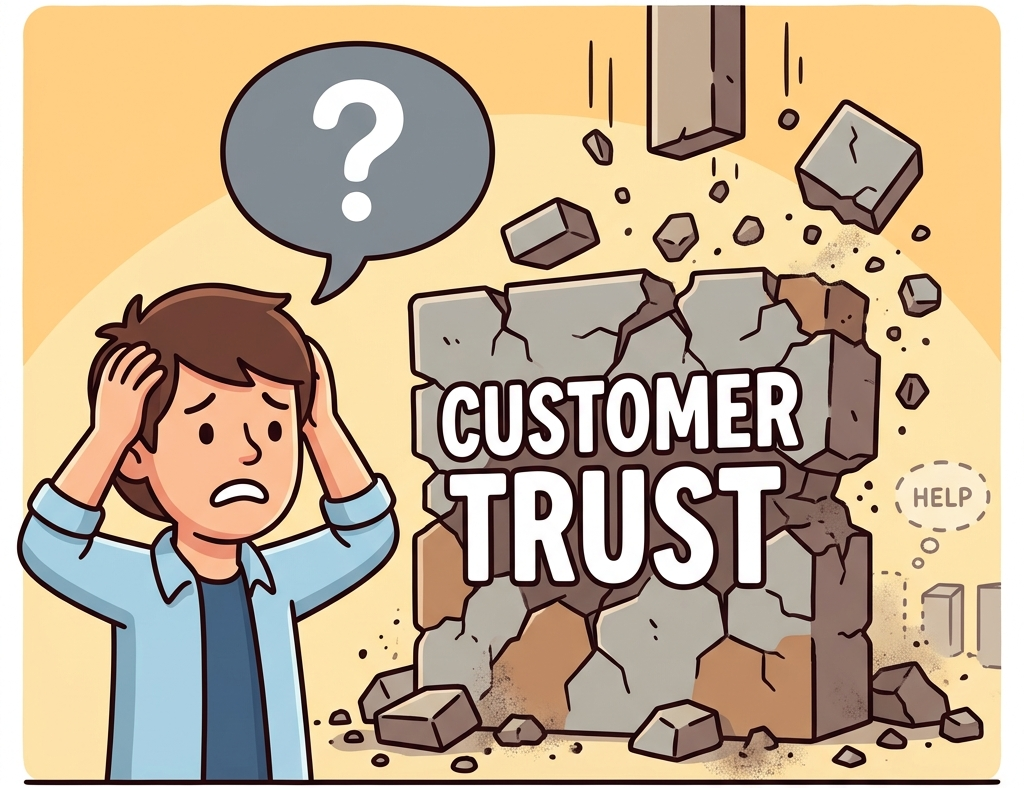
In the world of recurring services, we often fall into the trap of believing that “no news is good news.” We assume that if a customer isn’t complaining and their payments are clearing, they are satisfied.
But there is a dangerous line between a loyal customer and a neglected one.
The Ghost in the Data
I recently sat down with my father to help him organize his home and auto insurance renewals. My Dad is the kind of customer every company dreams of: loyal to a fault, having stayed with the same provider for decades. However, through the years, his original broker was acquired—not once, but twice.
As we went through the paperwork, I felt a knot tighten in my stomach. Stacked on his desk were invoices that still listed his wife—my stepmother—as the primary contact. She passed away nearly ten years ago.
In that decade, through two acquisitions and countless automated renewals, no one from the company had reached out to check in. Because they remained silent, my Dad was left with policies that didn’t fit his current life, causing him to overpay for years.
The Trust Gap
When I saw my stepmother’s name on those bills, my perspective shifted instantly. I wasn’t just looking at a clerical error; I was looking at a decade of invisibility. My stress level hit its peak, and my loyalty to that brand evaporated. I stopped looking for a way to fix the policy and started looking for a way out.
We eventually reached an exceptional customer representative who resolved the issues, but the damage had already occurred. Exceptional service at the point of crisis is just damage control. True brand equity is built in the years leading up to the crisis.
Scaling the Human Touch
How do you prevent your most loyal customers from feeling like ghosts in your system? The answer lies in a hybrid approach: using automation to catch the details and humans to build the connection.
For example, imagine a long-term client whose policy hasn’t changed in several years. An automated system flags this account as overdue for review, prompting a personal outreach from a customer representative. During a brief call, the rep learns of recent life changes—such as a death in the household—and updates the account to ensure better coverage and pricing. The customer not only feels seen but also valued, turning a routine check into renewed loyalty.
Here are some actions to initiate scaling with the human touch:
- Automated Triggers (The Pulse): Use your CRM to flag stagnant accounts. If a policy or service hasn’t been updated or reviewed in the past 3 years, the system should trigger a mandatory “Account Wellness Check” rather than a standard renewal notice. To set this up: Most modern CRMs allow for custom filters and workflow triggers. Start by creating a filter for accounts with a “last policy review date” older than 3 years. Then, configure an automated workflow that assigns a task or sends a notification to a designated team member, prompting them to reach out for a review. Schedule a recurring report that highlights these accounts monthly to ensure they are never overlooked.
- Data Hygiene: Automated systems should cross-reference life events or public records (when appropriate) or include an “Update Your Life Status” prompt that is more than a checkbox in a portal.
- The Human Intervention: When a customer hits a certain loyalty milestone (e.g., 5, 10, or 20 years), it should trigger a personal outreach. A fifteen-minute “reconnection” call can identify changes in needs that an algorithm will never see, and it proves someone is actually watching the shop. Of course, scaling personal outreach across an entire customer base can be daunting. To manage this effectively, prioritize high-value or at-risk accounts for direct outreach first, and use a tiered approach for the rest: offer personalized messages or check-ins to your top tier, and then combine automation with lighter-touch human interactions (such as customized emails) for the rest. This ensures that your most valuable relationships get the attention they deserve without overwhelming your team.
How to Audit Your Legacy Customer List
Don’t let your oldest fans fall through the cracks. Perform a “Legacy Audit” once a year using these three steps:
- Identify the Untouched: Filter your database for customers who have been with you for 5+ years but have had zero non-automated interactions in the last 24 months.
- The Right-Size Test: Pick 20 legacy accounts at random. See if the amount they pay matches your current best offerings. If they are paying for outdated services, call them to offer better options and turn at-risk customers into loyal ones.
- The Life-Event Check: Revise your intake and review forms to ask clear questions about household size (for consumer sales), business scale (for business sales), or your customers’ current priorities. Make it easy for people to explain their present situation. Don’t rely on old data—keep your information up to date.
The Bottom Line
If your customers only hear from you when the bill is due, you aren’t a partner; you’re a utility. And in a world of endless options, utilities are easily replaced. Don’t wait for your customer’s child or advocate to find a decade-old mistake. Reach out before the silence becomes too loud to ignore.